Robinhood vs. Schwab Introduction
Two financial powerhouses that offer trading, investing, and more are Robinhood and Charles Schwab.
Before selecting one over the other, be sure to look over our research.
Commissions
| Broker Fees |
Stock/ETF
Commission |
Mutual Fund
Commission |
Options
Commission |
Maintenance
Fee |
Annual IRA
Fee |
|
Charles Schwab
|
$0
|
$49.95 ($0 to sell)
|
$0 + $0.65 per contract
|
$0
|
$0
|
|
Robinhood
|
$0
|
na
|
$0
|
$0
|
$0
|
Services
| Broker Review |
Cost |
Investment Products |
Trading Tools |
Customer Service |
Research |
Overall Rating |
|
Charles Schwab
|

|
|
|
|
|
|
|
Robinhood
|
|

|

|
|
|
|
Charles Schwab: $0 commissions + ACAT reimbursement + satisfaction guarantee at Charles Schwab.
Robinhood: Free stock worth up to $200 and 2% match when you open an account.
Category One: Investing Services
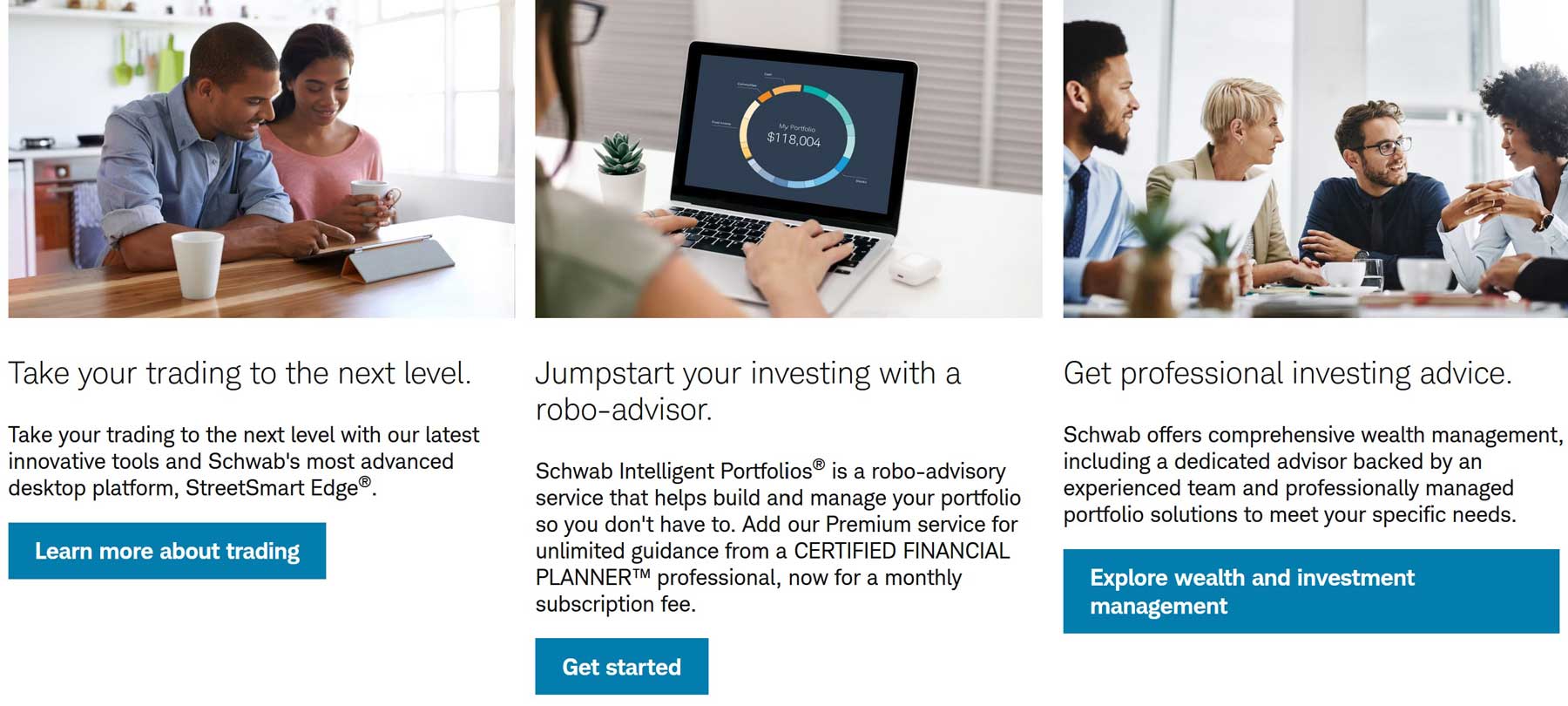
Schwab customers can choose between self-directed brokerage accounts and several advisory services. Schwab Intelligent Portfolios is its robo-advisor and charges no advisory fee, while other managed and full-service programs charge fees that vary by service and asset level.
Schwab’s standard self-directed brokerage account has no annual account fee and comes with a large assortment of tradable products. These include options, fixed-income securities, mutual funds, ETFs, closed-end funds, futures, forex, and stocks. The last category, stocks, includes foreign and over-the-counter products.
Robinhood offers a narrower selection of investments overall. For instance, there are no individual bonds,
spot forex, or mutual funds. However, Robinhood does offer stocks, ETFs, options, a number of closed-end funds, futures, and direct cryptocurrency trading.
Direct cryptocurrency trading is not yet available at Schwab.
Robinhood also offers Robinhood Strategies, an investment-advisory service available for taxable and retirement accounts. The program provides ongoing
portfolio management and charges an annual management fee of 0.25%. The minimum investment is $50. Accounts with less than $500 are invested in ETFs, while accounts with $500 or more may hold a mix of ETFs and individual stocks.
Winner: Schwab
Category Two: Banking Services
As we said at the outset, these two companies are “financial powerhouses.” They’re more than just brokerage
firms. Both have cash-management and banking tools with a variety of perks. Robinhood Banking offers checking and savings accounts, a debit card, a checkbook, mobile check deposit, and ATM access. Robinhood Banking requires an annual Robinhood Gold subscription and is being rolled out by invitation.

Robinhood Banking’s debit card can be used wherever Mastercard is accepted. In-network ATM withdrawals
can be made without a Robinhood ATM fee for customers who meet the applicable direct-deposit requirement. Robinhood Banking also lets customers order a physical
checkbook or have a check mailed on their behalf.
An actual checkbook is available with Schwab’s checking account, and there is no charge for standard checks.
Schwab’s checking account has no monthly service fee or account minimum. It
pays interest (0.01% APY) and has a debit card with unlimited ATM fee rebates worldwide.
Schwab also offers a savings account, Schwab-branded American Express credit cards, and home lending solutions
through Rocket Mortgage. Robinhood Banking also offers a savings account, and Robinhood separately offers
credit cards. Both companies now offer mobile check deposit.
Winner: Schwab
Category Three: Mobile Apps
To manage investing and cash products, both firms have mobile apps. Schwab offers
two primary investing apps: thinkorswim mobile and the regular Schwab Mobile app. The Schwab
software has some very good stock and options tools. For example, advanced order capabilities include:
- Trailing stop
- Contingent orders
- OTO (one triggers the other)
- OCO (one cancels the other)
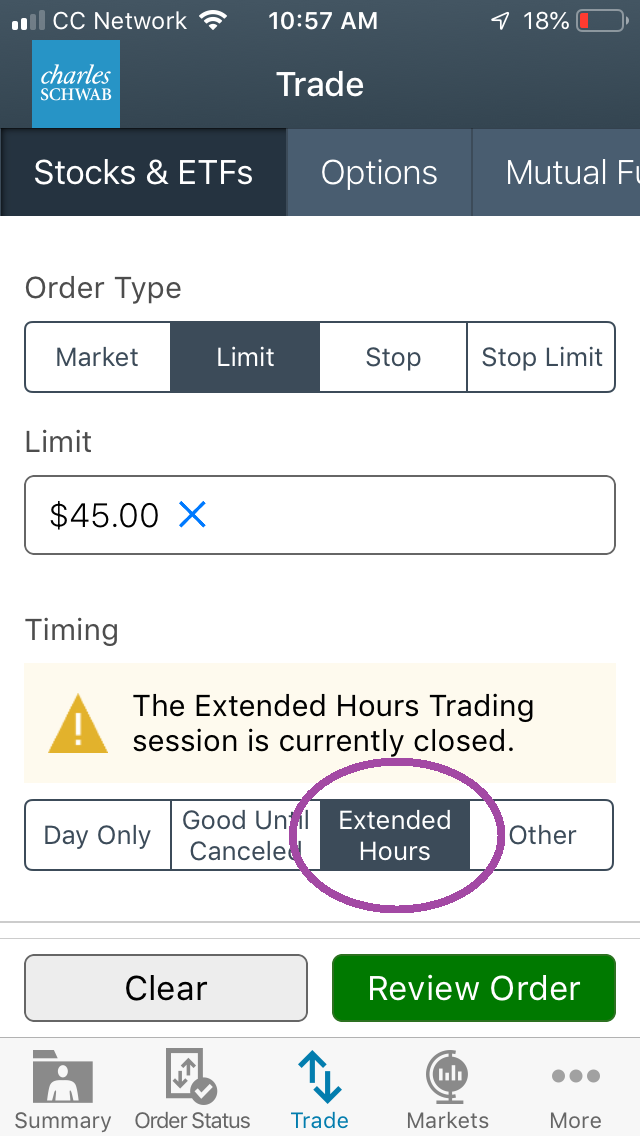
Charts on thinkorswim can be shown in horizontal format, and hundreds of technical studies and indicators are available. The
major downside is the lack of mutual-fund trading on thinkorswim. This problem is solved with the regular Schwab app, which
supports mutual-fund trading along with broader account-management tools.
Robinhood’s investing app also packs in quite a few useful features. Its advanced charts now include technical indicators, and the trade ticket supports market, limit, stop, stop-limit, and trailing-stop orders for equities. It’s also possible to set up a recurring investment for a security. Robinhood now supports short selling for eligible margin accounts, although the feature is still being rolled out to customers.

Options traders have access to Robinhood’s Options Strategy Builder, which supports a wide range of basic and advanced strategies. Robinhood’s software also has integrated P/L diagrams. Breakeven points and maximum profit/loss numbers are shown.
Winner: Schwab
Category Four: Computer Software
A larger interface and more tools can be found on both companies’ websites. Robinhood’s web platform offers advanced charting with technical studies, and these tools are also available in the mobile app. In addition, Robinhood Legend is a free advanced trading platform with customizable layouts, extensive charting, technical indicators, drawing tools, scanners, and trading tools for stocks, options, crypto, and futures. Watchlists sync across Robinhood’s platforms.

The watchlists on Schwab’s site also sync with those found on its mobile platforms. Charting is on
a much higher level with thinkorswim. Thinkorswim is available in web, desktop, and mobile formats. There are all sorts of drawing gadgets, lots of indicators, and several graph styles.
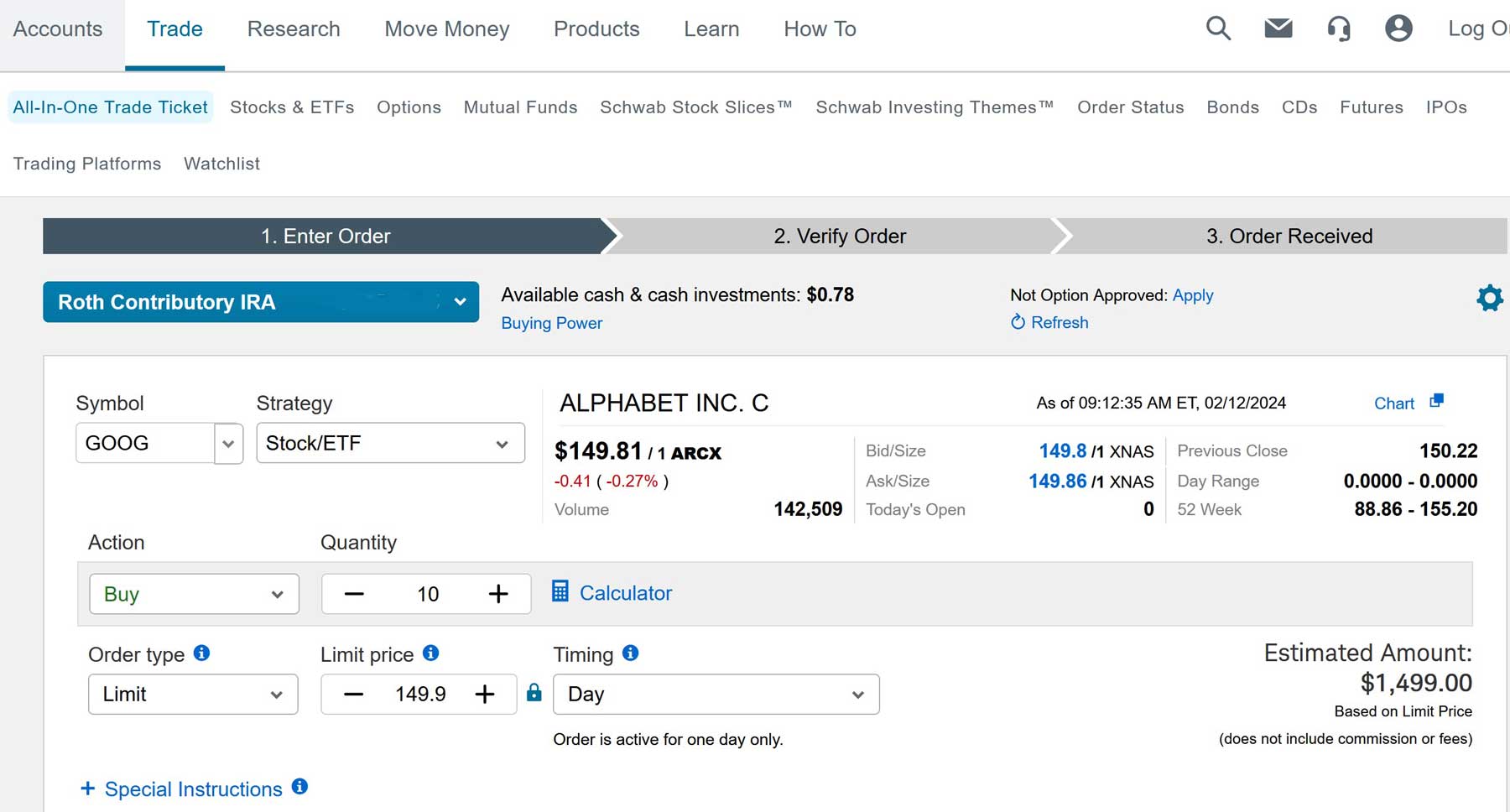
Schwab.com’s All-in-One Trade Ticket can submit orders for stocks, ETFs, and options. There are advanced conditional order types, such as contingent orders, OCO, and order-triggers-other. Futures and forex can be traded through thinkorswim.
Many more tools can be found on the Schwab website. These can be used to trade mutual funds and fixed-income
securities. And there’s a desktop program as well. Called thinkorswim, it has many powerful tools and
costs nothing to use.
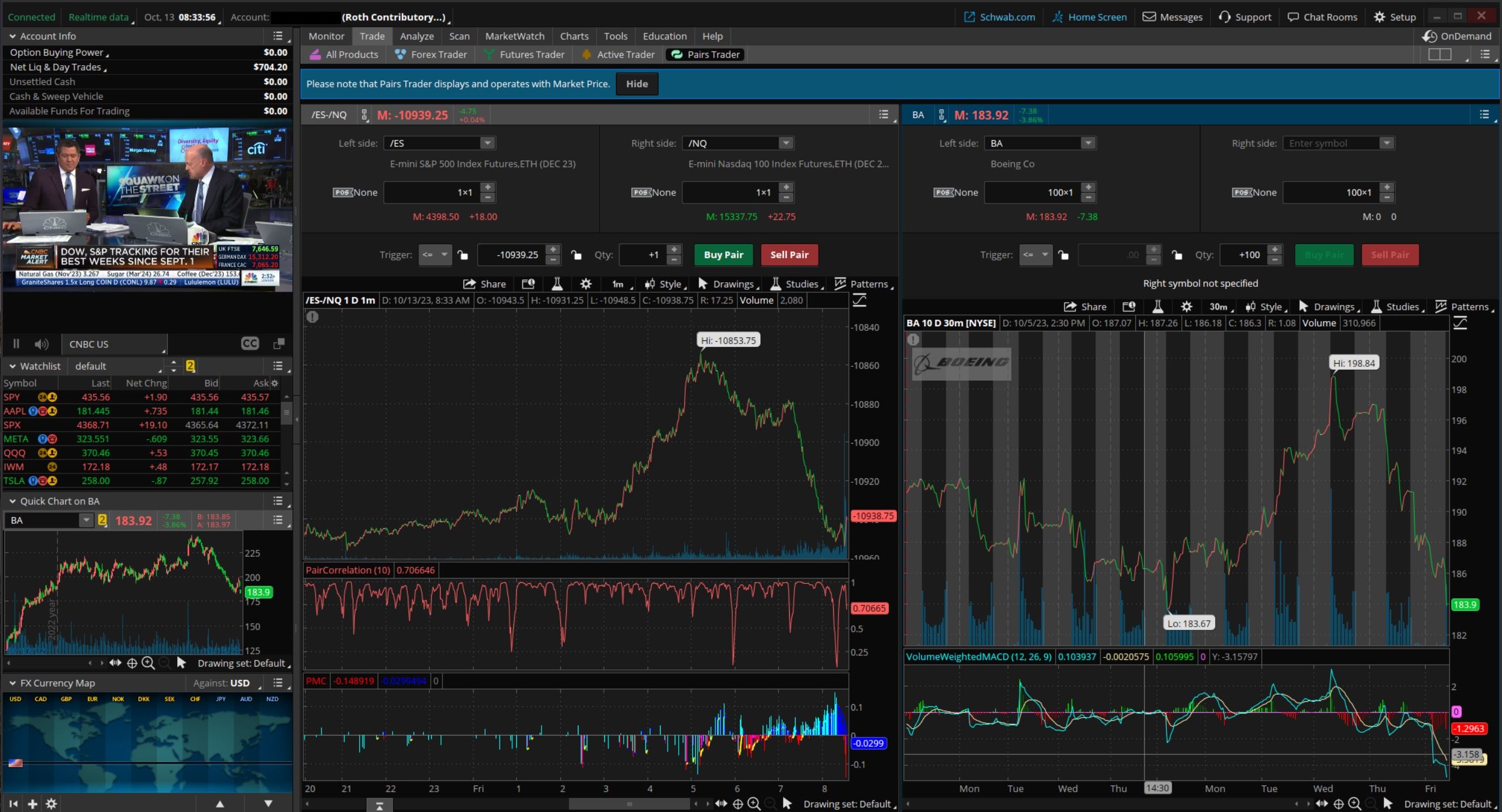
Schwab’s thinkorswim suite is already available in desktop, browser, and mobile formats with tons of powerful trading tools. Examples include full-screen charting, backtesting tools, advanced screeners, pro-level order types, and paperMoney simulated trading.
Winner: Schwab
Category Five: Margin
Margin trading is possible at either broker-dealer in this rivalry. Robinhood's rate begins at 5.25% and ends at 4.2%. Robinhood’s software displays position-level margin maintenance requirements, including the maintenance ratio and dollar requirement for individual positions.
Schwab’s software also displays margin information. The maintenance requirement of a stock or ETF is available through its
margin tools. Schwab charges margin interest on a
tiered schedule that begins at 12.075% and drops to 10.325% or even lower for really high balances.
Another major change is short selling. Both brokers now support short selling, although Robinhood’s feature is still being rolled out to eligible margin customers. Robinhood also has substantially lower published margin interest rates than Schwab across comparable standard balance tiers.
Winner: Robinhood
Category Six: Additional Services
Periodic Mutual Fund Investing: Schwab has it.
Extended Hours: Both firms have after-hours and pre-market trading in securities. In their standard extended-hours sessions, Robinhood has
10 more minutes of trading time than Schwab. Both firms also offer 24/5 overnight trading in select stocks and ETFs. Most futures products trade nearly around the clock on weekdays, while Robinhood also offers some futures markets with broader hours.
Robinhood cryptocurrencies can be traded 24/7.
DRIP Service: Available at both brokerage houses free of charge.
Individual Retirement Accounts: An IRA can be opened at either firm. Robinhood offers a 1% match on eligible self-directed IRA contributions, or 3% with Robinhood Gold. Managed IRAs through Robinhood Strategies do not receive the contribution match. Schwab has more IRA types.
Fractional Shares: Stocks, ETFs, and cryptocurrencies can be traded in dollar amounts at Robinhood.
Schwab now offers fractional shares of most U.S.-listed stocks and ETFs, with purchases starting at $1.
IPO Access: Initial Public Offerings are available at both firms for eligible customers.
Fully-paid Securities Lending Program: Available at both firms.
Winner: Robinhood
Our Recommendations
Frequent Stock Trading: Definitely Schwab with thinkorswim.
Retirement Planning & Long-Term Investing: Schwab.
Small Accounts: Schwab Intelligent Portfolios has a $5,000 minimum, while Robinhood Strategies has a $50 minimum. Neither firm has an account minimum for its standard self-directed brokerage account. Both firms now offer broad fractional-share trading in U.S.-listed stocks and ETFs, while Robinhood also offers fractional cryptocurrency trading. For a very small managed account, Robinhood is the better choice.
Beginning Investors: Robinhood Strategies for very small managed accounts; Schwab Intelligent Portfolios for investors who meet its higher minimum and want Schwab’s broader financial-services ecosystem.
Mutual Fund Trading: Schwab.
Promotions
Robinhood: Free stock worth up to $200 and 2% match when you open an account.
Charles Schwab: $0 commissions + ACAT reimbursement + satisfaction guarantee at Charles Schwab.
Charles Schwab vs Robinhood: Which is Better?
Although Schwab is the clear overall winner, we do like Robinhood’s overnight, cryptocurrency, and low-cost margin trading.
|
|
Written by Alex Bost
Updated on 8/25/2026.
|